Monde Homestead Tour
Life hasn't changes here in generations.
For photos of the homestead visit check out the Victoria Falls Gallery -https://africa.portz.ca/galleries/victoria-falls
While there are several group tours to various homesteads, I was able to organize a one on one visit for the morning to talk with the Headman of a homestead that has been operating the same way for as far back as he can remember.
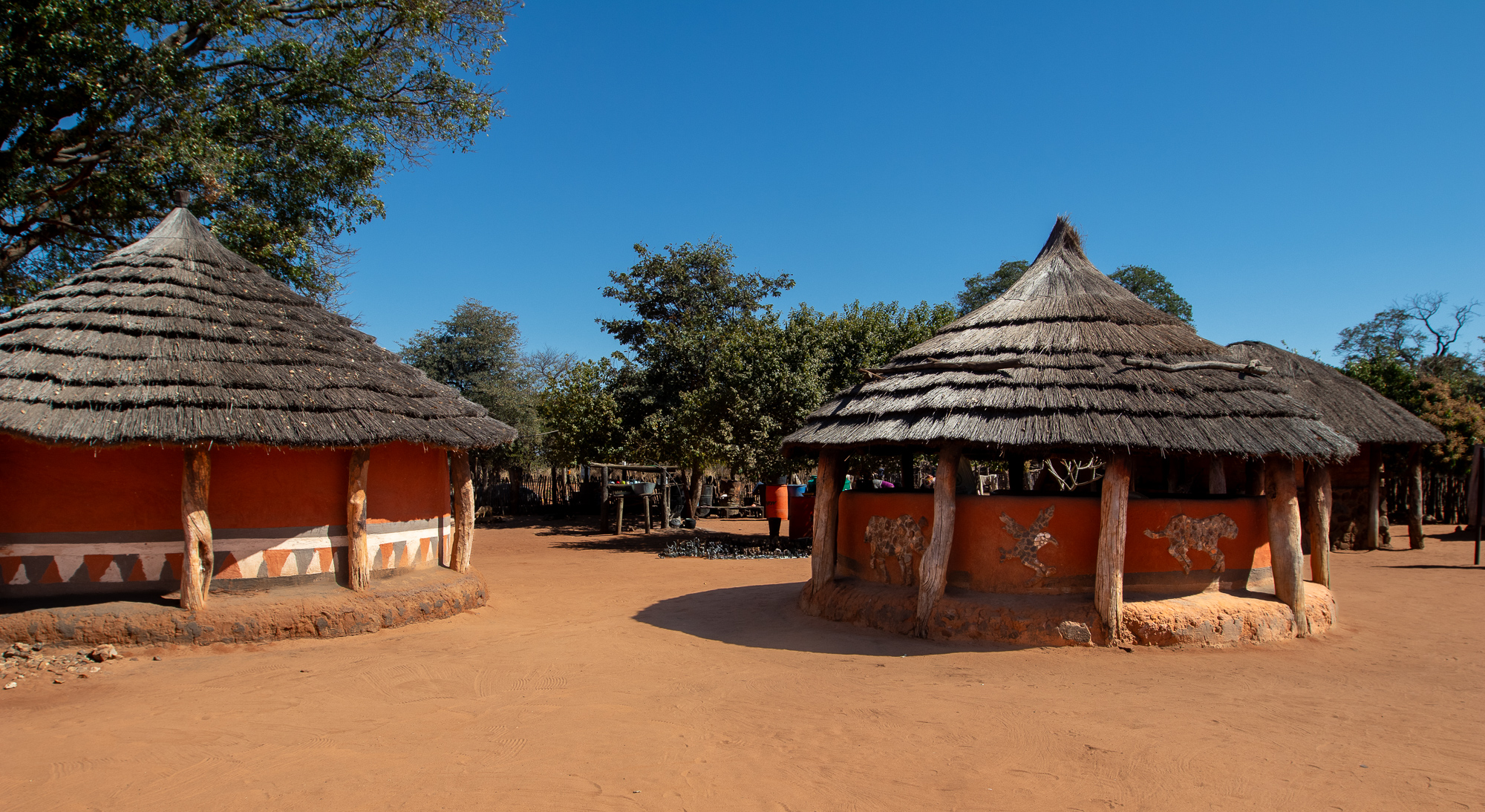
Here a family of 3 generations totaling 15 people live in a compound consisting of 3 sleeping huts (with up to 5 people per hut), and 2 cooking kitchens, one open for summer, and one closed for winter.
They are descendants of the Zulu people, moved here generations ago by the British colonizers. Living on land of sand, that makes farming extremely challenging, while trying to eek out an existence in a country where the government offer no services for free, you pay to go to school, or to go to the doctor. Unfortunately both the police and government here are generally corrupt. Even getting to the village, I experienced the corruption as police check points are found along the road, where it is common to extract brides from tourists and locals alike for any number of "issues". My driver, Hope, warned me, as we set out for a 10km drive outside of Victoria Falls, "if the police stop us, tell them you are a new local, they are less likely to look for a bribe that way". sure enough we were stopped and Hope was questioned as they hadn't seen her driving that road before, and needed to check her license. Everything was in order, and we were let go without any further issues. Hope told me after, if they can find anything, or in some case even if they can't, you can expect "fines" of $5-$30. Fail to pay them immediately and you will find yourself arrested and in front of a judge to plead your case.
Back to the homestead; life got exciting 8 months ago, when an NGO began installing methane stoves at the homesteads in the area, as a way to combat deforestation in the area. No one in the village has electricity, running water, and until the methane was put in, fuel. Fire is everything, it lights the darkness, cooks your food, and keeps you warm. With only wood to sustain it, fire has caused a wood shortage, but now they can burn methane made from cow dung in hopes that less wood will be burned. For water, the entire town uses a community well built by UNICEF and sunk to a depth of 120m, it is a 1km walk from the homestead to the well.
Huts are made of clay, with elephant grass thatch roofs that will last 15-20 year without replacement. the floors resemble a type of concrete, but are made of cow dung mixed with water. they feel like concrete and are easy to clean. a fresh coating of dung is applied a couple times a week as sweeping the floors does remove material. huts are round, so snakes have no corners to hide in, and small holes and venting make the hut cool even on the hottest days.
Culture is everything, families live together, kids are additional hands to work the fields during the rainy season and look after their parents in their old age.
Life is very hard, with back breaking work tilling and tending soil that is not much more than sand. they only have the rainy season to grow as much as they can so they can dry and store food to last the rest of the year. Fields are planted with maize, pumpkin, sorghum, and peanuts. waste water is used to water two fruit trees. Global warming has made life even harder, with less water available each year. The family also has goats, cows and chickens, but they rarely eat meat, except of special occasions. the chickens lay eggs, the cows and goats give them milk. The chicken lay lots of eggs, but the family doesn't eat eggs, as those eggs are best served to make more chickens. As the headman explained, a meal for the family would be 15 eggs, or a single chicken. it is more economical to raise the eggs in to 15 chicken and eat one of them. Once the crops are harvested, they use a long poles and a mortar to grind the maize into powder to later be reconstituted with water. it takes 3-5 hours of pounding to make 2kg of maize powder.
Traditions haven't changes for generations, marriage still requires the boys family to negotiate with the girl's family and provide cows as dowery. Moving to a village, requires you to not be a stranger, Life and death start in the kitchen, where a pregnant women will give birth, and stay to recover, and where the dead are prepared for burial on the family's land. As was explained to me, you want to die where you were born, it is all part of the circle of life.
I got to spend a little over 2 hours with this family, ask any questions I wanted, they even offered to let me come back and stay with them for a day or two, but alas I am off to Botswana tomorrow, but if I ever make it back this way, I might have to take them up on the offer.